
Mindfulness Techniques for Kids: Rose, Thorn, and Bud
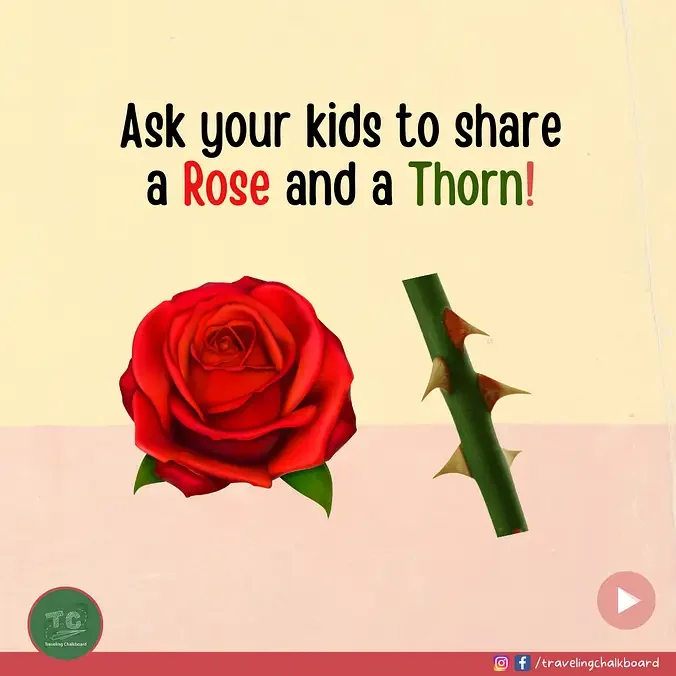
One of my favorite mindfulness techniques for kids is sharing a rose, thorn, and bud at dinner time. I’ve found that my kids open up so much more than when I simply ask, “How was your day?” Since we started this practice, it has become a meaningful daily ritual—and a powerful way to encourage reflection and conversation.
What Is a Rose, Thorn, and Bud?

The rose, thorn, and bud technique is a simple mindfulness tool that helps kids reflect on their day or week:
Rose: Something good that happened
Thorn: Something challenging or difficult
Bud: Something they are looking forward to

Open conversations with kids are incredibly important, but getting them to talk isn’t always easy. Sharing a rose, thorn, or bud gives kids a clear, structured way to start those conversations—without pressure.
When (and How) to Use This Mindfulness Technique
Dinner is my favorite time to talk about roses and thorns, but it’s not the only option. If your family eats on the go or in front of the TV, you could try:
The drive home from school
A daily walk
A homework break
Bedtime check-ins
There’s no wrong time to share a rose and thorn. Choose what works best for your family, and you’ll be glad you made space for this mindfulness technique in your day.
Why This Mindfulness Technique Gets Kids Talking
Asking kids to share a rose, thorn, or bud makes conversation easier because it’s specific. That small detail often opens the door to deeper discussion and more sharing.
Sound familiar?
What did you do today?
“I don’t know.”
What did you learn today?
“I don’t know.”
For kids, questions like “How was your day?” are often too open-ended. Their brains struggle to organize and retrieve information on the spot—especially for neurodivergent kids. It’s not that they don’t know; they just don’t know where to start.
You Can’t Have a Rose Garden Without Thorns
One thing I love about this practice is that it encourages kids to talk about the good, the bad, and everything in between. Experiencing the full rainbow of emotions is essential, and learning that “thorns” are a normal part of life helps build emotional resilience.
If you’d like to learn more about helping kids cope with emotions, check out this resource.
I’ve seen real changes in my own kids. My daughter—who used to shut down when she got in trouble or was told “no”—now talks more openly about her challenges. My son has shared struggles at school that helped us uncover the root of behaviors his teachers noticed.
When I was a kid, I was bullied and didn’t know how to talk about it. My parents didn’t find out until one of my friends spoke up. By normalizing “thorns,” I hope my kids know it’s always safe to come to me with hard things—and that they have a way to start those conversations.
Fun Additions to Make It Your Own

Once rose and thorn becomes a habit, feel free to personalize it. My son came up with something he calls “water and sunshine.” He uses it to share times when he used mindfulness tools to prevent a thorn from happening. He named it that because he realized those tools helped create a new rose.
Other ideas you can add (and rename creatively!):
Worries
Memories
Plans or ideas
Good deeds
Proud moments
Want More SEL Tools?
Looking for more ways to teach social-emotional learning concepts? Try reading Brian the Brain: Mind Trip, a STEM-based children’s book that teaches emotional regulation.
You can also download the Self-Regulation Companion Guide here.
Want your kids to develop a growth mindset? Check out my Brain Power classes on Outschool.