
Writing a Children’s Book: How to Turn Your Knowledge Into an Educational Story
Outline and topic provided by Chat GPT, content written by Jenny Mouse
Why Writing a Children’s Book Matters
If you find there is a gap in knowledge in your field, writing a children’s book can be one of the most impactful ways to share what you know. Children have very flexible brains with keen memories, and are capable of learning much more complex topics than we give them credit for. In fact, if we wait until teenage years to start teaching a topic it might already be too late for the children to truly absorb and excel in that area. That is why children's books on higher level topics are so important.
You will find that publishing a book opens up opportunities for you beyond selling the content of your book. Author visits are a favourite way for teachers to bring in community members and support their students' literacy and learning. They also help you connect with schools, teachers, homeschool groups, and open up the door for many other partnership opportunities in your community.
Becoming an author opens up media opportunities. Radio interviews, podcasts, speaker events, newspaper interviews, and television appearances, all welcome authors with quality books to share.
Books are also a high level gift for you to give to your clients. Literature is highly valued and heavily appreciated. Since parents are likely to read your books to their kids, it also presents an opportunity for the whole family to read together.
What Knowledge Should You Use When Writing a Children’s Book?

Choose a topic that you know well. For example I would recommend turning your work or educational experience into a book. Writing within your educational or work experience will ensure that your book remains high quality, and will also allow you to work with an audience that you already know.
Within your topic, start writing down potential story ideas. Try to keep each story to one major theme or lesson, children's books are best kept simple! If you find that your clients are always asking the same questions, you might consider writing a children's book that has the answers for them. Don't forget to tailor for you target age group!
Understanding Your Audience When Writing a Children’s Book
Toddlers do best with board books (which can be a bit trickier to produce) that are short and simple. Think of repetitive stories, interactive elements (such as finding a ladybug on each page), and simple storylines. Toddler books don't necessarily need a story to tie them together, images and simple sentences that introduce simple topics are great for this age group!
An example of one of my favourite toddler series is
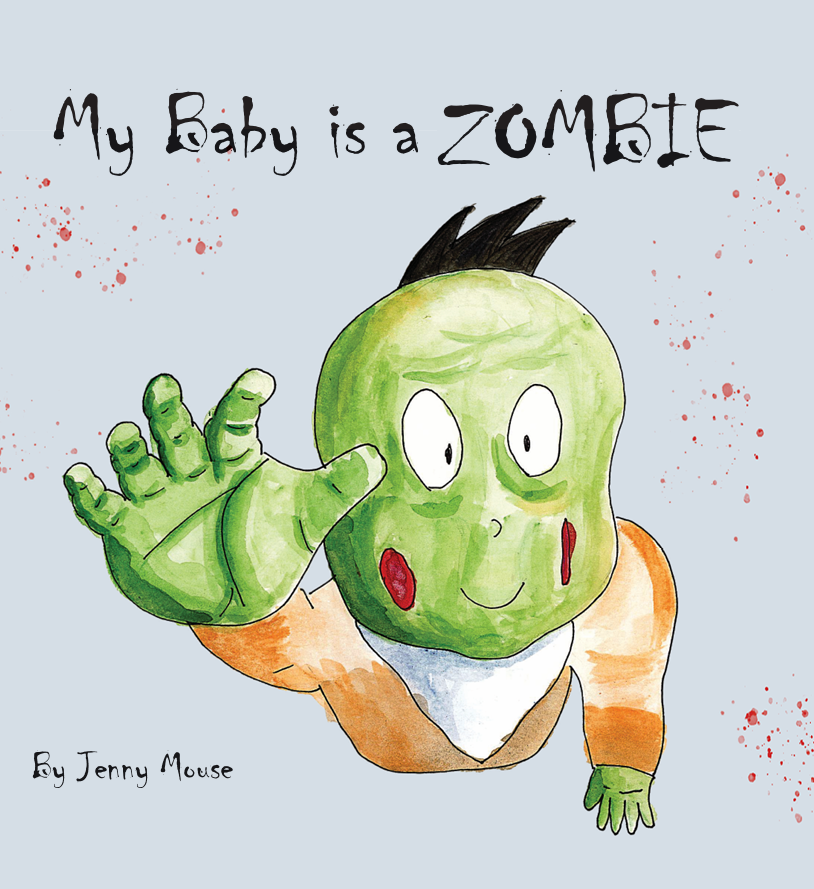
My book series "My Baby is…" is also perfect for toddlers because of the simple story line and repetitive wording.
Preschoolers still love board books, but any binding will do for this age group. Some parents prefer hard covers or board books because they are a bit more durable in little hands. Preschoolers still do best with simple stories, but don't discount their ability to learn hard topics! Any kid that can remember Tyrannosaurus Rex can learn any new word with the proper motivation! Remember that simple and repetitive is key. This age group also loves rhyming books.
Early readers tend to have a bit longer of an attention span, and can handle big topics, but if you want them to read to themselves keep the wording simple. Pronunciation guides to help them break down big scientific words are also really helpful. School age kids love stories that get silly!
If you're not sure how to break down your topic and make it interesting for a child to read, start by finding a child to test it out on! Sit down with kids of the right age range and tell them about the topic. You will quickly discover if you need to simplify things further or now. You will probably also identify your own gaps in knowledge because kids love to ask out of the box questions!
Key Components of Writing a Successful Children’s Book
Keep it short
Children's books are usually between 500-1000 words long. If you find that you are long winded, a good rule of thumb is to remove any unnecessary words.
Keep it simple
One key concept or lesson in each book is best. Remember that a good story is memorable, so it might feel simple, but the lesson is likely to stick with your readers for life.
Let the illustrations work with you
They say a picture is worth 1000 words, and in children's book writing this saying is not only true, it is key. The pictures in your book should tell a story as well as the words do. Use them to reduce the number of words necessary in your book, to tell a deeper story, or even to tell a parallel story.
Tell a Story
Even though you are teaching a concept, it is still important to tell a story. Stories save better in our brain than facts, and children are much more likely to remember your book if it contains a story.
Be Silly
Kids love to be silly, so don't be afraid to get silly with your writing!
Conclusion
Writing a children's book is one of the easiest ways to dip your toes into publishing. It is one of the most affordable products to produce, and the impact that a children's book can have is exponential. If you have knowledge that will make a difference to the next generation, I highly encourage you to write it down and share it with the kids in your community. Inclusion STEM education, financial understanding, literacy, there is no end to the teaching potential of children's book writing
Need some Help?
You’ve got this. Writing a children’s book is absolutely within your reach. And if you ever get stuck or need a little guidance along the way, I’m here to help. Check out my writing services—from done-for-you ghostwriting packages to a DIY guide—so you can get your book published on your terms.