
This article breaks down the most common growth mindset myths, explains what a true growth mindset really is, and offers practical advice for applying it in everyday life.
I used to think that I had a growth mindset. Ever since I learned about brain plasticity, I have based everything on the fact that learning is dynamic. I have always recognized that one of my greatest strengths has been the ability to keep learning throughout my life. It came as a shock when I finally got to know and understand my fixed mindset! Lets go over some common myths of what growth mindset is and isn’t.
Myth #1 People either have a fixed mindset or a growth mindset.
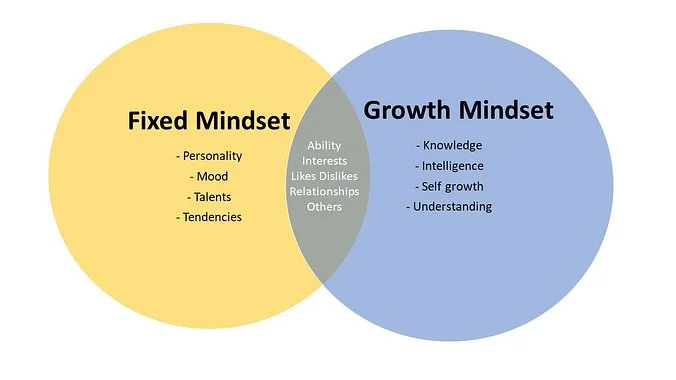
There is no either or. Growth mindset is not a switch that can be flicked on or off. Everyone has a growth mindset in some areas and a fixed mindset in others. Changing your mindset is about identifying where your fixed mindset is and what triggers it. If anyone claims to “have a growth mindset” then they have a fixed mindset about growth mindset. It is this realization that brought me to my next level of growth. Developing a growth mindset is just as much about recognizing where and when your fixed mindset comes out as it is about positive thinking. Like me you might have a growth mindset about learning but a fixed mindset about your personality for example.
Myth #2 Growth mindset is synonymous with positive thinking and open mindedness.
Growth mindset on a surface level seems simple. Just think positive and you will achieve your dreams! Anyone who has ever worked towards their dreams will argue otherwise. Positive thinking might help point you in the right direction but just sitting around thinking something will get you nowhere. Achievement only comes with work and commitment, and that is what growth mindset is, the commitment to work and achievement!
Positivity can actually be very toxic without checks. Toxic positivity is when someone is purely positive without questioning their actions. Toxic positivity can actually lead to the development of a fixed mindset. A growth mindset can not be achieved without constant questioning and corrections.
Myth #3 Growth mindset is synonymous with hard work.
A lot of people think that if they work hard enough they will achieve their goals. If they are not achieving their goals they just need to work harder. I’m here to tell you that hard work does not always accomplish your goals, and sometimes it does just the opposite. Stubbornly working away at something that is not progressing is pointless. Growth mindset involves smart work, not hard work. Work that is committed to improvement.
My husband and I have an ongoing joke about false growth mindset. One day when I was reaching for something at the top of the cupboard I said “I can’t reach it… yet. Just wait until I grow!” This is obviously not an option for me. I can’t believe myself into getting taller. What I should have said instead was “I can’t reach it yet… let me go grab a stool.” Don’t just try harder to reach your goal if it is out of your grasp, look for tools and new strategies that could get you where you want to be.
Myth #4 You can do anything if you just believe in yourself!
Growth mindset isn’t about being the best at something, it is about improving yourself. It does not mean that you can do anything, it means that you can improve at anything. You might not be Micheal Jordan, but you can improve your aim.
When you focus on improving yourself you both make your expectations realistic while at the same time remove your limitations. You have removed your self imposed ceiling, so now you are now free to feel happy about your self improvement, and possibly free to surpass your previous ceiling.
Myth #5 Growth mindset is unachievable
Growth mindset gets lumped in the “miracle fix” category sometimes. It seems like a very fanciful idea, and I think that impression often comes from a lot of the other myths about growth mindset. You can’t just accomplish your dreams because you believe in yourself, you can’t just work hard until you succeed, and a growth mindset isn’t unachievable because everyone already has a growth mindset in some areas. It isn’t like you flick the “growth” switch on and have instant success. It is about slowly changing your thought patterns to make you more positive, creative, and innovative.
Next Steps
Building a growth mindset isn’t about perfection—it’s about progress. When you understand the myths that hold you back, you can replace them with healthier, more productive beliefs. Growth mindset isn’t a magic switch; it’s a daily commitment to learning, experimenting, and improving. Every small shift in thinking brings you closer to becoming the most capable version of yourself.
Developing a growth mindset takes practice and the right guidance. If you want to help kids (or yourself) build stronger resilience, curiosity, and confidence, here are a few resources that can support your journey.
If you're looking for growth mindset books and tools for kids, the Brian the Brain series teaches neuroscience in a fun and accessible way.
You can also explore how STEM education supports growth mindset development in this detailed article.
Frequently Asked Questions About Growth Mindset
-
A growth mindset is the belief that you can improve your abilities through learning, practice, feedback, new strategies, and continued effort. It is not about believing you can accomplish absolutely anything; it is about recognizing that improvement is possible.
-
No. People can have a growth mindset in some areas and a fixed mindset in others. For example, someone might believe they can improve their academic skills while believing that their personality or creativity cannot change. Developing a growth mindset involves recognizing where fixed thinking appears and understanding what triggers it.
-
No. Positive thinking and growth mindset are not the same thing. A growth mindset involves being willing to question your approach, recognize mistakes, accept feedback, and change strategies when something isn't working. Simply thinking positively does not guarantee improvement.
-
No. Growth mindset is not simply about working harder. Sometimes working harder at the same strategy won't solve a problem. A growth mindset means being willing to try new approaches, use different tools, learn from mistakes, and adjust your strategy.
-
No. Growth mindset does not mean that belief alone can make anything possible. Instead, it focuses on improvement. You may not become the best person in the world at a particular skill, but you can often improve your abilities through learning, practice, feedback, and better strategies.
-
No. Growth mindset focuses on improvement rather than being the best. The goal is to compare your current abilities with where you were before and look for ways to continue developing.
-
Yes. Children can practice growth-oriented thinking by learning to view mistakes as opportunities to learn, experimenting with different strategies, asking questions, and responding to challenges with curiosity rather than immediately deciding that they cannot do something.
-
Parents can encourage growth mindset by focusing on learning and improvement rather than simply praising outcomes. Asking questions such as "What did you learn?", "What could you try differently?", or "What strategy might help?" can encourage children to think about the process of learning.
-
Teachers can encourage growth mindset by giving students opportunities to revise their work, learn from mistakes, experiment with different approaches, and respond to feedback. Classroom activities that emphasize problem-solving and improvement can help students see learning as an ongoing process.
-
Not necessarily. Continuing to work on a problem can be valuable, but blindly repeating the same approach isn't always productive. Sometimes the growth-oriented response is to change strategies, find a tool that can help, ask for assistance, or decide that a different approach is needed.
-
Growth mindset isn't something you simply switch on and achieve permanently. Everyone experiences fixed and growth-oriented thinking in different situations. Developing a growth mindset is an ongoing process of recognizing unhelpful thought patterns and practicing more flexible approaches to learning and problem-solving.